
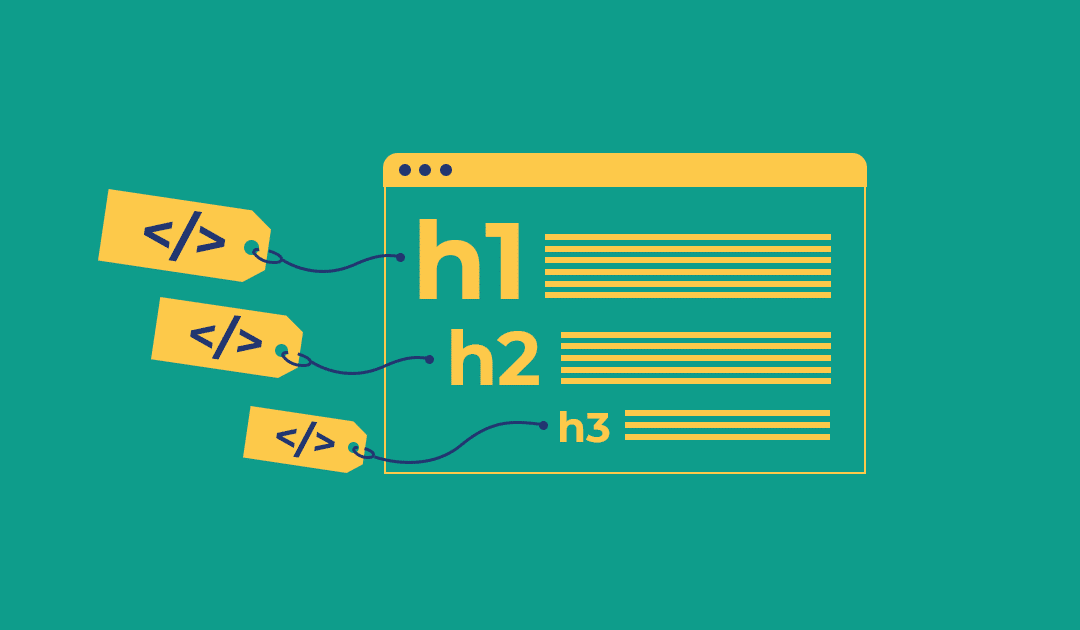
Your website may look beautiful. The design might even win awards. But here is the scary part: if your H1 tag is not optimized, Google may have no idea what your page is actually about.
And if search engines cannot understand your content, you are losing visibility, traffic, and ultimately business. That is a high price to pay for overlooking one line of code.
Why the H1 Tag Matters
The H1 tag is the main headline of your page. Think of it as the title of a book chapter. It tells search engines and visitors, “This is what this page is about.”
Google uses your H1 tag to help determine relevance. If it is missing, duplicated, or stuffed with random keywords, your page loses clarity. And when your message is unclear to search engines, your ranking suffers.
A beautiful design cannot fix that problem.
Common Mistakes We See
Too many businesses treat the H1 tag as an afterthought. Here are a few of the most common errors:
1. No H1 at all. Without it, Google has to guess your page’s focus. Spoiler: guessing rarely works out in your favor.
2. Multiple H1s. More than one headline confuses search engines and dilutes your message.
3. Generic text. “Welcome to Our Website” might look friendly, but it tells Google nothing useful.
4. Keyword stuffing. Forcing too many keywords into the H1 reads awkwardly and makes you look spammy.
Each of these mistakes costs you trust, rankings, and conversions.
The Right Way to Use an H1
Done right, your H1 works hard for both Google and your visitors. Here is what a strong H1 tag does:
-
Clarity. It tells search engines exactly what your page is about.
-
Relevance. It includes a primary keyword naturally, without feeling forced.
-
User Experience. It is written for humans first, search engines second. Visitors should know immediately they are in the right place.
-
Consistency. It matches the overall message of the page and supports the rest of your content.
For example, instead of “Welcome to ABC Company,” a better H1 might be:
“Custom Home Building Services in Southwest Michigan.”
That one line tells Google and visitors who you are, what you do, and where you do it.
Why This Matters More Than You Think
Ignoring your H1 tag is like publishing a book without a title. People may stumble across it, but most will not know what it is about or why they should care.
An optimized H1 improves your search rankings, helps customers find you faster, and builds confidence that they are in the right place. It is one of the simplest, most overlooked ways to strengthen your digital presence.
Do Not Let Your H1 Hold You Back
Your website is more than design—it is a communication tool. Every element should work toward making your message clear and compelling. And that starts with your headline.
If your H1 is missing, generic, or outdated, it is costing you opportunities every single day.
The good news: this is an easy fix. A single, well-optimized H1 can set the tone for your entire site, improve your SEO, and give visitors a clear reason to stick around.
Your website already tells a story. Make sure the headline is the one you want Google and your customers to hear.
Written by Gerald Stanley and Sydney Elder